
 GI-tagged Pashmina is the most reliable indicator of authentic Kashmiri Pashmina in a global market filled with imitation shawls. While many products are sold under the Pashmina name, only GI-certified Pashmina meets strict standards of fibre origin, traditional handcraftsmanship, and geographical authenticity. Understanding what GI-tagged Pashmina means is essential for buyers seeking genuine luxury rather than approximation.
In today’s international marketplace, certification has become as important as softness or appearance. For discerning buyers, GI tagging represents clarity, legitimacy, and respect for heritage in a category often clouded by misleading claims.
The Global Misuse of the Term “Pashmina”
Over time, the word “Pashmina” has become one of the most loosely used terms in luxury textiles. Across online marketplaces and retail platforms worldwide, it is frequently applied to shawls made from wool blends, viscose, acrylic, or standard cashmere. These products may appear soft or visually appealing, but they lack the fibre quality, craftsmanship, and provenance that define authentic Kashmiri Pashmina.
This misuse has diluted the meaning of the term and made it increasingly difficult for buyers to distinguish genuine Pashmina from imitations. Without legal protection, “Pashmina” risked becoming a generic descriptor rather than a culturally specific craft. GI certification was introduced to restore clarity and protect the integrity of the name.
What Is a Geographical Indication (GI)?
A Geographical Indication, or GI, is a form of intellectual property protection granted to products that originate from a specific region and possess qualities uniquely linked to that location. These qualities are shaped by geography, climate, raw materials, and traditional methods of production.
Globally recognised examples include Champagne from France and Darjeeling tea from India. In the same way, Kashmiri Pashmina has been granted GI status to legally protect its origin, artisanal process, and cultural identity. The GI tag ensures that the name “Pashmina” cannot be used indiscriminately without meeting defined standards.
What Does GI-Tagged Pashmina Mean in Authentic Kashmiri Pashmina?
GI-tagged Pashmina refers specifically to authentic Kashmiri Pashmina that complies with strict criteria under the Geographical Indication framework. This certification confirms that a shawl is not merely inspired by Pashmina but is genuinely rooted in its traditional source and method of creation.
A GI-tagged Pashmina must be made from the ultra-fine undercoat of the Changthangi goat, a rare breed native to the high-altitude Himalayan regions of Ladakh and the Tibetan plateau. In addition, the spinning and weaving must be carried out entirely by hand in Kashmir using traditional techniques. Without meeting all of these conditions, a product cannot legally be certified as Kashmiri Pashmina.
Why GI Certification Was Introduced for Pashmina
GI certification for Pashmina was introduced to address widespread consumer confusion, protect artisan livelihoods, and preserve a centuries-old craft. As imitation products flooded global markets, buyers struggled to identify authentic Pashmina, while traditional artisans faced unfair competition from machine-made alternatives sold under the same name.
Without legal safeguards, the craft risked being reduced to a marketing term disconnected from its cultural and geographical roots. GI certification re-established this connection, ensuring that authentic Pashmina remains legally and culturally tied to Kashmir and its traditional methods of production.
The Fibre Standards Behind GI-Tagged Pashmina
At the heart of GI-tagged Pashmina lies the fibre itself. Authentic Pashmina is sourced exclusively from the Changthangi goat, whose undercoat is exceptionally fine, typically measuring between twelve and sixteen microns. This fineness is a direct result of the extreme Himalayan climate in which the goats live.
Fibres outside this range, even if soft to the touch, do not meet authentic Pashmina standards. Blended fibres, chemically treated yarns, or machine-processed materials are excluded from GI certification, reinforcing the importance of natural quality over artificial enhancement.
The Role of Hand-Spinning and Hand-Weaving
GI-tagged Pashmina is defined not only by fibre origin but also by the way that fibre is transformed. The spinning and weaving must be carried out entirely by hand in Kashmir, using skills passed down through generations.
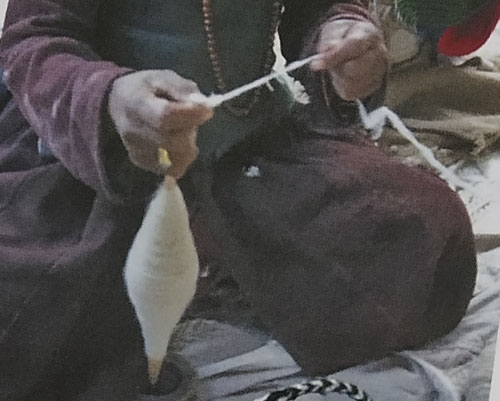
Image Source: From the Internet
This requirement is not symbolic. Pashmina fibre is so fine that machines often damage it, compromising its natural strength and softness. Hand-spinning preserves the fibre’s integrity, while hand-weaving allows artisans to control tension, texture, warmth, and drape. These time-intensive processes form an inseparable part of what GI certification protects.
How GI-Tagged Pashmina Protects Buyers
For buyers, GI certification provides a reliable framework for trust. In a market filled with ambiguous claims, a GI tag offers verifiable assurance that a Pashmina product meets established standards of authenticity.
Rather than relying solely on subjective factors such as feel, appearance, or price, buyers can use GI certification as an objective reference point. This is particularly valuable for international consumers who may not have direct access to Kashmiri markets or traditional artisans.
GI-Tagged Pashmina vs Non-Certified Pashmina: What’s the Difference?
Many products labelled as Pashmina may still appear luxurious, but without GI certification, there is no guarantee of authenticity. Such products are often made from standard cashmere or blended fibres and may be machine-processed to imitate softness.
GI-tagged Pashmina represents a higher level of assurance. It confirms not only fibre quality but also ethical sourcing, traditional craftsmanship, and geographical authenticity. The difference lies in long-term value, integrity, and cultural significance rather than surface appearance alone.
Why GI-Tagged Pashmina Is More Expensive
The price of GI-tagged Pashmina reflects realities that cannot be industrialised. Each Changthangi goat produces only a small quantity of usable fibre annually, collected once a year. The subsequent hand-spinning and hand-weaving processes take weeks or even months to complete a single piece.
Certification itself requires traceability, compliance, and verification. These factors add to cost but ensure authenticity. Rather than being a premium imposed by branding, the price of GI-tagged Pashmina reflects rarity, labour, and preservation of craft.
Also Read: G.I. Certified Handspun Pashmina: Why It Is More Expensive than Regular Pure Pashmina
The Cultural Importance of GI Certification for Kashmir
Beyond consumer protection, GI tagging plays a crucial role in preserving Kashmiri craftsmanship. By legally linking Pashmina to its place of origin, certification helps sustain artisan communities and protects traditional skills from being replaced by industrial shortcuts.
This protection ensures that Pashmina remains a living craft rather than a diluted concept. It allows future generations of artisans to continue practising and refining techniques that have defined Kashmiri Pashmina for centuries.
Why GI-Tagged Pashmina Matters in the Global Luxury Market
In the modern luxury landscape, buyers increasingly value provenance, transparency, and ethical sourcing. GI-tagged Pashmina aligns naturally with these expectations by offering clarity in a category often defined by ambiguity.
For international buyers, certification bridges the gap between distance and trust. It positions Kashmiri Pashmina alongside other globally protected heritage products and reinforces its status as a textile of cultural and artisanal significance.
Clearing Common Misconceptions About GI-Tagged Pashmina
A common misconception is that all Pashmina sold in Kashmir is automatically GI-tagged. In reality, only products that meet specific fibre and process criteria and are registered accordingly qualify for certification. Another misunderstanding is that GI tagging limits creativity. In fact, certification focuses on authenticity of origin and method, allowing for diverse designs and contemporary expressions within those boundaries.
Understanding these distinctions helps buyers appreciate GI certification as a framework for authenticity rather than a restriction.
Pashmsutra’s Commitment to GI-Tagged Authenticity
At Pashmsutra, GI certification is treated as a foundation rather than a feature. The brand’s approach centres on genuine Changthangi fibre, traditional Kashmiri hand-spinning and hand-weaving, and ethical sourcing practices that respect both artisans and heritage.

By aligning with GI standards, Pashmsutra ensures that each piece represents not only luxury but legitimacy. This commitment allows buyers to engage with Pashmina confidently, knowing that what they invest in is rooted in authenticity rather than approximation.
Frequently Asked Questions About GI-Tagged Pashmina
GI-tagged Pashmina is often misunderstood, so certain questions arise frequently among buyers. Not all Pashmina is GI-tagged, as only products meeting strict fibre, origin, and craftsmanship criteria qualify for certification. GI tagging does not change how a shawl looks or feels, but it confirms that it meets recognised standards of authenticity.
GI certification is widely regarded as the strongest assurance of authentic Kashmiri Pashmina, as it legally links the product to its geographical and cultural origin. Machine-made products cannot qualify for GI certification, regardless of softness or appearance. For buyers seeking genuine Pashmina, GI-tagged pieces offer long-term value that imitation products cannot provide.
Final Thoughts: Why GI-Tagged Pashmina Truly Matters
In a marketplace filled with imitation and uncertainty, GI-tagged Pashmina stands as a marker of truth. It protects buyers, sustains artisans, and preserves a textile tradition that depends on recognition and respect to survive.
Understanding what GI-tagged Pashmina means allows buyers to move beyond surface-level softness and appreciate the deeper value of provenance, craftsmanship, and cultural continuity. For those seeking authentic luxury, certification is not a minor detail—it is the difference between imitation and heritage.
Written by the Pashmsutra editorial team, specialists in authentic Kashmiri Pashmina and traditional craftsmanship.


