

Explore Pashmsutra's GI Tagged/ Certified Pashmina
Why Some Fabrics Itch — And Why Pashmina Rarely Does
Most people associate winter fabrics—especially wool—with itching. This perception has shaped buying behavior for decades. However, dermatological science provides a much more precise explanation: itch is not caused by the category of fabric, but by how its fibers interact with the skin at a microscopic level.
At the center of this interaction is fiber diameter (measured in microns) and its effect on cutaneous nerve endings. When examined through this lens, not all wool-based fibers behave the same.
This is where Pashmina becomes clinically interesting.
Despite belonging to the broader wool family, Pashmina fibers fall into a diameter range that is structurally different from most conventional wool, which changes how they interact with the skin.
Visual Understanding: Why Fiber Thickness Changes Skin Response
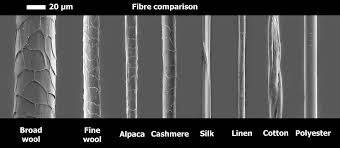
At a microscopic level, the difference between irritation and comfort is governed by how fibers bend—or fail to bend—against the skin.
The Clinical Basis of Itch: Skin Nerve Endings and Mechanical Stimuli
Human skin contains specialized nerve endings designed to detect physical stimuli. Among them, C-tactile fibers (C-fibers) are particularly relevant in the perception of itch.
These nerve endings respond to low-level mechanical pressure. When activated repeatedly, they send signals to the brain that are interpreted as itch, prickle, or discomfort.
Importantly, dermatological research shows that:
-
Textile-induced itch is primarily mechanical, not allergic
-
The trigger is fiber pressure on nerve endings, not the fiber material itself
Supporting study:
-
Neurophysiology of itch — PubMed
https://pubmed.ncbi.nlm.nih.gov/16930271/
The Role of Fiber Diameter (Microns): Where Pashmina Stands Out
The single most important variable in textile-induced itch is fiber diameter.
Dermatology and textile research consistently identify a threshold:
-
Fibers above ~25 microns → higher likelihood of itch
-
Fibers below ~18–20 microns → significantly reduced irritation
Supporting study:
-
Rediscovering Wool as a Skin-Friendly Fibre — Acta Dermato-Venereological
https://pubmed.ncbi.nlm.nih.gov/28350041/
Comparative Fiber Diameter: Pashmina vs Other Materials
| Material | Fiber Diameter (µm) | Clinical Interpretation |
|---|---|---|
| Pashmina | ~12–16 µm | Well below irritation threshold |
| Cashmere | ~14–19 µm | Generally low irritation risk |
| Merino Wool | ~17–24 µm | Clinically validated (fine grades) |
| Regular Wool | ~25–40 µm | Higher irritation probability |
| Alpaca | ~18–30 µm | Variable |
Why Pashmina Behaves Differently on Skin

Explore Pashmsutra's Patterned Pashmina
Pashmina fibers, typically ranging between 12–16 microns, are significantly finer than most wool fibers. This difference is not just numerical—it fundamentally alters how the fiber behaves when it comes into contact with the skin.
Because of their extremely small diameter:
-
Pashmina fibers exhibit low bending rigidity
-
They flex easily upon contact
-
They distribute pressure rather than concentrating it
This means they are less likely to generate the localized pressure required to activate C-fibers, and therefore less likely to produce the sensation of itch.
Step-by-Step: How Pashmina Minimizes Itch (Scientific Mechanism)
When a Pashmina shawl rests on the skin, thousands of ultrafine fibers come into contact with the epidermis. Unlike coarser fibers, these do not behave like rigid micro-needles.
Instead, they bend and move with the skin. As the body moves, the fibers adapt rather than resist. This prevents the formation of pressure points that would otherwise stimulate nerve endings.
In contrast, coarser wool fibers—particularly those above 25 microns—are structurally less flexible. When they contact the skin, they maintain their shape and apply localized force. This repeated stimulation is what the nervous system interprets as irritation.
Clinical Benchmark: What We Know from Merino Wool
While no direct dermatological trials exist on Pashmina, clinical studies on superfine Merino wool provide a useful benchmark.
A study published in the British Journal of Dermatology found that superfine Merino wool (≤18.5 microns):
-
Did not increase irritation
-
Was associated with improved skin hydration
-
Reduced eczema severity in participants
Study:
-
Effects of Merino Wool on Atopic Dermatitis
https://pmc.ncbi.nlm.nih.gov/articles/PMC6554012/
Scientific Interpretation for Pashmina:
Since Pashmina fibers are even finer than the Merino fibers used in these trials, it is reasonable—based on fiber mechanics—to infer an equal or lower likelihood of mechanical irritation.
However, it is important to state:
No direct clinical dermatology trials exist specifically on Pashmina fibers.
Mechanical vs Allergic Itch: Where Pashmina Gains Advantage
Most discomfort associated with wool is not due to allergy but to mechanical stimulation.
True allergic reactions involve:
-
Immune system activation
-
Redness, swelling, or rash
In contrast, mechanical itch:
-
Occurs immediately upon contact
-
Is driven by fiber thickness and stiffness
Because Pashmina fibers fall well below the mechanical irritation threshold, they are structurally less likely to trigger this response.
Additionally, authentic Pashmina—when minimally processed—reduces the likelihood of irritation from chemical residues, which can sometimes contribute to discomfort in other textiles.
Beyond Fiber Diameter: The Role of Authenticity
Fiber diameter alone does not guarantee comfort if the material is:
-
Blended with coarser fibers
-
Chemically processed
-
Industrially altered
Authentic Pashmina, such as that offered by Pashmsutra, maintains:
-
Consistent ultrafine fiber range (~12–16 microns)
-
Minimal interference with natural fiber structure
-
Traditional processing methods
👉 Learn more about authentic Pashmina:
https://pashmsutra.com/blogs/news
Why This Matters for Modern Consumers
As consumers become more research-driven, the focus is shifting from perceived softness to measurable comfort.
Understanding the relationship between:
-
Fiber diameter
-
Nerve activation
-
Mechanical irritation
allows for more informed decisions—especially for individuals with sensitive or reactive skin.
Final Evidence-Based Conclusion
Textile-induced itch is fundamentally a neuro-mechanical phenomenon, governed by how fibers interact with skin nerve endings.
The critical determinant is fiber diameter:
-
Fibers above ~25 microns are more likely to cause irritation
-
Fibers below ~18–20 microns significantly reduce this risk
Within this framework, Pashmina stands out due to its exceptionally fine fiber diameter (~12–16 microns), placing it well below the irritation threshold identified in dermatological research.
While direct clinical trials on Pashmina are not available, its structural properties strongly support its position as a low-irritation textile based on established scientific principles.
Also Read: Best Winter Fabrics for Sensitive Skin (Dermatologist-Backed Guide)
Clinical References
-
Neurophysiology of Itch
Source: PubMed
https://pubmed.ncbi.nlm.nih.gov/16930271/ -
Rediscovering Wool as a Skin-Friendly Fibre
Source: Acta Dermato-Venereological
https://pubmed.ncbi.nlm.nih.gov/28350041/ -
Fiber Diameter and Prickle Sensation Studies
Source: PubMed
https://pubmed.ncbi.nlm.nih.gov/12006136/ -
Effects of Merino Wool on Atopic Dermatitis
Source: PubMed Central
https://pmc.ncbi.nlm.nih.gov/articles/PMC6554012/
Compliance Note
-
No direct clinical dermatology trials exist for Pashmina fibers
-
Conclusions are based on validated fiber diameter and skin interaction research
-
No medical claims are made
Closing Insight
Itch is not about wool vs non-wool.
It is about how fibers behave at a microscopic level.
And at that level,
Pashmina behaves fundamentally differently.
Written by the Pashmsutra editorial team, specialists in authentic Kashmiri Pashmina and traditional craftsmanship.


